
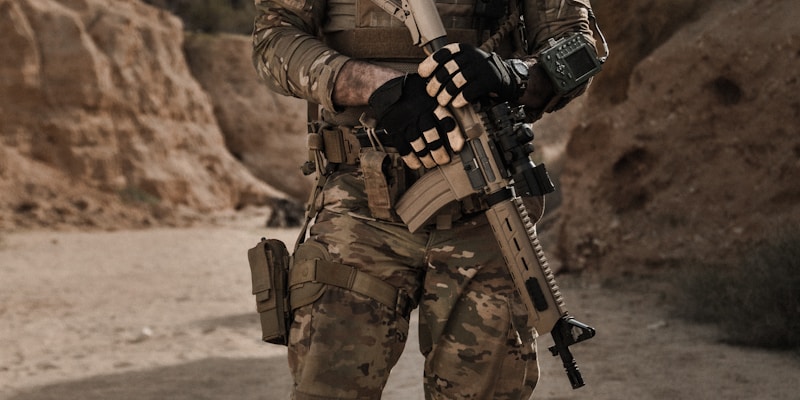
Veterans and CCW: Military Service Benefits for Concealed Carry Permits
Military veterans often qualify for expedited CCW permits and training exemptions. Learn how your service can fast-track your concealed carry permit in any state.
Military veterans have dedicated their lives to defending our nation, and many states recognize this service by offering expedited or simplified paths to concealed carry permits. If you're a veteran, your military training and background may qualify you for significant benefits in the CCW application process.
How Military Service Helps With CCW
Most states recognize military firearms training as meeting or exceeding their civilian training requirements. This means veterans can often skip the training course entirely or satisfy requirements with their DD-214 and proof of firearms qualification. Additionally, many states offer reduced fees, expedited processing, or both for veterans.
State-by-State Military Benefits
States handle veteran benefits differently. Many states accept military service as complete satisfaction of training requirements, including Arizona, Florida, Georgia, Indiana, Kentucky, Michigan, Missouri, Nevada, Ohio, Pennsylvania, Tennessee, Texas, Utah, Virginia, and Wisconsin. Other states accept military training as partial credit, still requiring a brief supplemental course.
What Documentation You Need
To take advantage of military benefits for CCW, you'll typically need your DD-214 showing honorable discharge, proof of firearms qualification (if available), valid military ID (for active duty or retired), and standard application materials.
Active Duty Considerations
Active duty service members face unique considerations. Many states offer non-resident permits to military personnel stationed within their borders. The Servicemembers Civil Relief Act provides certain protections regarding state residency requirements. Some states waive fees entirely for active duty applicants.
The LEOSA Advantage
The Law Enforcement Officers Safety Act (LEOSA) allows qualified retired law enforcement officers to carry concealed nationwide. While this doesn't directly apply to most veterans, those who served in military police, criminal investigation, or similar law enforcement roles may qualify under LEOSA's provisions.
Transitioning From Military to Civilian Carry
The transition from military firearms use to civilian concealed carry involves important mindset shifts. Military rules of engagement differ significantly from civilian self-defense law. Civilian carry requires understanding of proportional force, duty to retreat (in some states), and the legal aftermath of defensive gun use. Quality civilian CCW training addresses these differences specifically.
Recommended Path for Veterans
Even if your state exempts you from training requirements, we recommend completing a civilian-focused CCW course. Military training excels at combat marksmanship and tactical operations, but civilian concealed carry involves different scenarios, legal frameworks, and decision-making processes. A quality civilian course bridges this gap and ensures you're prepared for the specific challenges of everyday concealed carry.
Getting Started
Check your state's specific provisions for veterans. Gather your military documentation. If your state accepts military service as training credit, you can proceed directly to the application phase. If supplemental training is required, choose a program that specifically addresses the military-to-civilian transition.
Considering a New Hampshire nonresident permit?
If the NH route fits your travel plans, see how RushPermit’s paid application assistance works. Compare it with the official DIY instructions before choosing.
Explore NH Permit Assistance Read the NH application guideAffiliate-funded. The service is separate from government fees, state submission and the issuing agency's decision.